Stories are magical, for both the young and old. Here you can find book reviews for specific age groups, topics, or learning experiences. There are also booklists and lesson ideas for educators, librarians, and families.
Search This Blog
Showing posts with label historical fiction. Show all posts
Showing posts with label historical fiction. Show all posts
Poetry Month is a time to reintroduce the art of language to readers. In the middle and high school level, I am often met with groans and eye-rolls when the topic of poetry comes up, however, with these recommended books, I've been able to turn around the minds of even the most reluctant readers. These writers are creating literary experiences for readers to celebrate ideas through language and those groans and eye-rolls turn into expressions of piqued curiosity and intrigue.
The poetry collection,Wearing My Mother’s Heart bySophia Thakur is full of multigenerational voices of a grandmother, mother and daughter describing their experiences of being women through different lenses. This is recommended for middle grade readers and up.
A non-fiction novel-in-verse, The Mysterious Virginia Hall World War II’s Most Dangerous Spy by Claudia Friddell is about an American woman who becomes a spy for the British during WWII. Her many aliases and missions are detailed with photographs and maps of her adventurous experiences.This is recommended for middle grade readers and up.
Historical fiction novel-in-verse, One Step Forward by Marcie Flinchum Atkins, is about Matilda Young, a 15 year old girl who takes up the cause of suffrage in 1913 & becomes the youngest protestor to be arrested for it. Over the course of 7 years the reader goes with Matilda on her journey of activism.This is recommended for middle grade readers and up.
Contemporary fiction novel-in-verse thriller, Blood Gone Cold by Katy Grant is about two quarreling sisters who are going through a home invasion at their family’s cabin in the woods. They must put their differences aside in order to survive. This book is a hi-Lo book in that it’s of high interest to young adults but is written at a lower, elementary reading level.
Everything is Poison by Joy McCullough is a historical fiction story that takes place in Rome in the 1600s. 16 year old Carmela is finally old enough to work alongside her mother in the apothecary but soon learns that healing potions aren’t the only concoctions that are made there: poisons are also distributed to women who are in desperate need of them. This is a mixed-format book in that it is written in both novel-in-verse and prose and it is recommended for young adult readers and up.
Away by Megan E. Freeman is the follow-up to her award-winning novel in verse, Alone. In Alone, there is an emergency evacuation of a town in Colorado while twelve year old, Maddie, gets left behind. For months without human contact, news or electricity, she, along with her dog, tries to survive and figure out what happened that sent her entire community far away.
In Away, there are four teens who find one another while at the emergency evacuation camp and as they get to know one another, they uncover mysteries around the emergency. What information is being kept from the public and why?This book is a mix of formats from verse to letters and scripts. It can be read as a stand alone story or as a sequel to Alone. Both books are recommeded for middle grade readers and up.
The contemporary, novel-in-verse, I Can't Even Think Straight by Dean Atta, tells the story of teenager, Kai, who is grappling with his identity. It's not easy because his best friends are giving him different kinds of advice: does he stay closeted or share who he really is with his family and community? Kai's journey gets even tougher when he falls for the new boy at school who returns his feelings. Kai finds his way to deal with the consequences of his choices and faces his family and friends with renewed self-confidence. This book is recommeded for young adult readers and up.
The contemporary, novel-in-verse mystery, Wolfpack by Amelia Brunskill, captures the reader's attention immediately as one of the nine teenage girls living isolated from society in the woods disappears. Her fellow cult members, also teenage girls, are determined to uncover what happened to her. The story is told in alternating perspectives so the layers of what each person knows to be true are revealed, but only to the reader. Will they find out if their missing friend left on purpose or did something or someone make them disappear? This book is recommended for young adult readers and up.
Do you have any novels-in-verse that you'd recommend? Please share in the comments below and we can keep the conversation going.
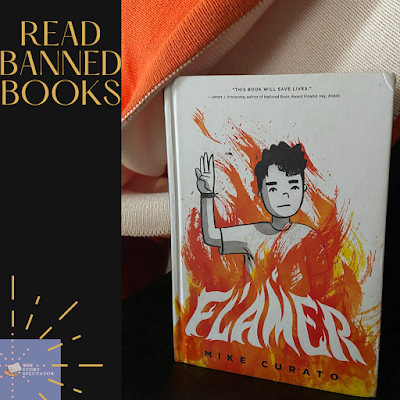
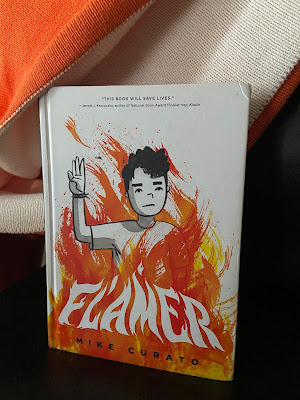
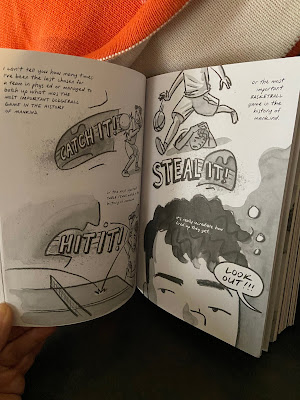
Flamer, a semi-autobiographical graphic novel by Mike Curato, is an emotional story of Aiden, a Filipino American boy who is spending his last week of summer break at his favorite place, his scout camp. The year is 1995 so the times reflect an era of homophobia, bullying, and lack of resources that could help a teenager who is questioning his identity.
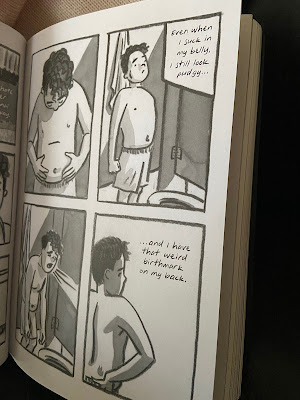
I was surprised to learn that Flamer has been challenged and even banned in school libraries across the country, despite winning a book award. The audience for the book are young adults who are the same age as the main character. Readers will be able to empathize with Aiden's apprehension for starting high school, his insecurities about his body image, and his surprising attraction to his friend. Although the book climaxes with a suicide scene, Aiden does not go through with it and it ends on a hopeful note. The author's note states that these were actual instances that he experienced so I believe it will help others, either as a friend or family member of a person exhibiting Aiden's characteristics or for people thinking similar thoughts as Aiden.
What I liked about this book was the honesty with which Aiden's voice permeates the entire story. I have yet to read a book that explores a boy's insecurities about his body with as much care as Curato write's Aiden's feelings. Many readers will be able to relate to Aiden and his reluctance to draw attention to his body as he constantly compares it to others in his camp.
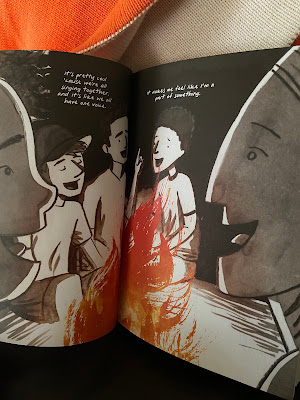
Another aspect of the book that stood out to me was the setting. Aiden finds so much peace in being outside in nature that it becomes his happy place. I think that other readers may also find solace in going outdoors when they are feeling stressed or need room to think. It also may encourage others to seek out ways to spend time outdoors with friends to increase endorphins and relieve them of social anxiety. The camp also lends itself to a sense of community that readers may look to join in order to feel as a part of a group.
As a junior high teacher and librarian, I can attest that the moments of bullying and teasing are 100% authentic. In Flamer, the reader experiences what Aiden does as he tries to navigate his place in an ever-increasing environment that tells him he needs to be an "alpha-male" while he doesn't have those inclinations. He also has racist remarks thrown at him for being Asian. At one point, a well-intentioned friend, tries to tell Aiden to draw less attention to himself and Aiden questions how he can do that. This is a very real dilemma that teens go through and Curato writes this delicate scene with such care, it's incredible. Readers can discuss what their experiences have been with racism towards Asian people and what they can do to stand up against that hate.
Finally, the part that I really enjoyed was Aiden's relationship with his only friend who allows him to be his true self. His pen pal, Violet, is a trusted ally whom Aiden confides his thoughts. This is a beautiful model of how even having one person who is on one's side makes a big difference in a person's life. Allyship is a topic that young people can discuss throughout this story and into their own lives. Aiden has some people who seem to be on his side but then change their mind once they realize that others call him out about being gay.
Aiden's coming-of-age realization about his sexuality is something that others may be able to relate. His religion has taught him that homosexuality was wrong so Aiden denied being gay when his classmates bullied him about it. Only after his dreams started showing his true feelings was when he started to come around to possibly accepting this aspect about himself. Some of his trusted scout leaders tried to help him through being himself but they ended up being outed and ultimately fired from the scout camp. This is another reflection of the times and even some discrimination against the LGBTQ community in today's world. Readers can discuss the factors that are at play and what they can do when they see this happening in their communities.
Overall, Flamer is a book that embodies a number of adolescent emotions and should be available to young adult readers who want to read it. It would also benefit educators, counselors, social workers, families and care givers to read it in order to broaden their understanding of a young person's needs during this critical time of their development. It may very well save a life.
The Year I Flew Away is a middle grade historical fiction novel by Marie Arnold. In it the reader meets 10 year old Gabrielle who lives in Haiti with her family but she is sent to Brooklyn to start a new life with her uncle's family until hers can join them in the U.S. Life is hard for Gabrielle in New York. She faces bullying for not speaking English.When a witch offers her a deal to make her fit in, Gabrielle's desperation wins. The witch's agreement has a cost and before she takes everything from Gabrielle, a team of people and even a rat, need to put that witch in her place! A story of identity, racism, family, friendship and new beginnings.
I enjoyed this story because it is unique to the Haitian culture and experience immigrating to the U.S. The folklore of the witch and the talking animals, like the rat, are reminiscent of authentic stories from the author's upbringing. It is also a relatable story to so many readers because they have either been the new kid or have had new kids in their classes at school. This can help readers empathize with how those students may be feeling and be better equipped with ways to welcome them into school and the community. Teachers and families who want to use this book with their middle grade readers can use the vast amount of resources offered on the Teaching Books website.
Last Night at the Telegraph Club the 2021 National Book Award for Young People's Literature written by Malinda Lo is a story that has yet to be told in the arena of young adult literature. Lo deserves the award for her portrayal of Lily Hu, a 17 year-old Chinese-American daughter of immigrants who settled in Chinatown in San Francisco. The year is 1954 and the Red Scare is is buzzing all around Lily and her community. She must be careful with whom she associates or else it could spell trouble for her family. What ends up happening not only affects Lily's future, but also those around her.
With the tone of a coming of age story, Lo reminds the reader of what it's like to be a teenager trying to figure out who you really are. When Lily sees an advertisement for The Telegraph Club with a male impersonator or cross-dresser, something in her is awakened. She feels drawn to the club and finds a fellow classmate, Kath, who has an in there. Once Kath introduces Lily to the club and the people inside, a whole new world opens up for Lily. A world where others who feel like her can feel normal. How can Lily return to the person her family expects her to be after she's discovered her feelings for women?
The best part of this story is when Lo uses the flashbacks between Lily's storyline with ones about her parents and her aunt. Their own circumstances and journeys to the U.S. to where they are in the 1950s sheds much light on their actions. As I read the story I kept telling myself if Lily only knew her own family's struggles with their identity in the U.S., then she could open up to them about her own apprehension about where she stands.
As a former history teacher, I also enjoyed the timelines that Lo includes that show the year, Lily and her family's major moments, and parts of world and American history that have affected Chinese Americans since they were first brought to the U.S. to build the trans-continental railroad. As the daughter of an aerospace engineer, I enjoyed the development of the Jet Propulsion Laboratory as Lily's other passion is studying space travel. Thankfully her aunt is a human computer for the program and encourages Lily to pursue her interest in math, science, and engineering. This part of history is interesting for readers to compare to Katherine Johnson and her pioneering work she did for NASA.
This story is an important one for people to read who may not be familiar with the experiences of Chinese Americans. It's also a history of how the LGBTQ+ community has had to seek out safe spaces to be themselves. It surprised me that in the ever-inclusive city of San Francisco, there was once a time that it was illegal for homosexuals to even congregate in public. The end of the novel is full of more information that Lo explains served as her basis for all of the storylines in the book. Readers who are interested have a number of resources to use to continue learning about more people who lived during this time and left their mark on the country.
Once Upon a Camel, a middle grade chapter book written by award-winning author Kathi Appelt with pictures by Eric Rohmann is a heart-warming, educational story that is perfect for animal & history lovers. The twist is that this story is told from the point of view of Zada, an old camel who is thrust into protecting the baby chicks of two kestrel friends as a wind storm rushes their way. Zada takes the journey seriously as they make their way across the wilderness towards safety and hopefully the chicks can reunite with their parents who were carried away by the storm. To help the time pass, Zada recalls how she came to live in Texas from Turkey. Through a series of flashbacks the touching tale leaps off the page and ends in the most uplifting, surprising way imaginable.
I highly recommend this for elementary, middle school and home libraries, especially those with readers who enjoyed The One and Only Ivan by Katherine Applegate. If readers like this book, then I suggest offering them Exiled: Memoirs of a Camel by Kathleen Karr about the perspective of an Egyptian camel who ends up in the U.S. There are similarities between the camels' experiences and those interested in the real-life history of camels being brought to the U.S. in the 1850s to be part of the camel corps for the U.S. Army. The illustrations also help the story move forward and softens the high stakes situations in which Zada finds herself.
Appelt shares more about her book and reads an excerpt in the video below:
Here's an entertaining book trailer to share with readers:
Loretta Little Looks Back: Three Voices Go Tell It by Andrea Davis Pinkney and Brian Pinkney is like no other book I've ever read. The multi-generational, historical fiction novel begins during an unfair sharecropping agreement between the main character's family and a plantation owner in Mississippi. Then it shifts to surviving under Jim Crow Laws to eventually marching for civil rights. It's a dramatic series of monologues that follows Loretta Little (from 1927-1930), Roly (from 1942-1950), and finally, Aggie B. (from 1962-1968). Each chapter has a where and when to set the stage for the reader as they step into the heart and mind of the characters. The first-person narration told in verse, song, and illustrations transport the reader to the emotion of each character.
What stood out was how the author, Pinkney, incorporated real-life historical figures into her storytelling. Readers can learn more about Fannie Lou Hamer, President Lyndon B. Johnson, James Forman, Emmett Till, Charles McLaurin, and of course, Martin Luther King, Jr. Pinkney also includes more information about sharecroppers in the southern U.S. with additional photos from that time.
As a parent, teacher and librarian, I would share this book with 3rd graders and above. It's certainly age-appropriate for readers to learn about the southern Black experience in the U.S. Each character is strong, distinct and unforgettable. The illustrations help readers understand the essence of the story without giving away too much.
Here are several video interviews the Pinkneys did to share with readers:
Angel of Greenwood is a historical fiction young adult chapter book written by Randi Pink. Set 11 days before the Tulsa Race Massacre of 1921, the story alternates point of view between teenagers, Angel and Isaiah. On the surface, they couldn't be more different: Angel is there to serve others, she's interested in studying and is always home tending to her ailing father. Isaiah on the other hand is always out of his house he shares with his mother. He has many hook-ups and runs around town with the community bully, Muggy. After Isaiah notices Angel dancing at church, he cannot get her out of his mind. He invokes the help of their teacher to give them a summer project delivering books to the community so they can have a chance at a relationship.
On the surface this is a romance of two interesting characters, however there is so much more to this story than that. Pink brings alive the community of Greenwood in detail so that by the end of the story, the characters who remain and are affected by the massacre feel real. The tension in the story lies in the fact that the attack is coming and each chapter reminds the reader through a countdown. Another tension is the way Isiah and Muggy's relationship changes. Readers can relate to when a friend's actions caused anxiety and when one needs to decide to cut ties with them. The will-they-won't-they romance between Angel and Isaiah is a beautiful unfolding. Although they debate about the merits of writers, Booker T. Washington and W.E.B. Du Bois, they truly listen to one another and come around to understanding the other person.
I highly recommend this book to 8th graders on up to adults. The subject of the community in Tulsa is not taught very much in schools so this is an accurate feel for what it was like there, how the residents created this free space to thrive, and how they protected their own interests. For further reading, Pink includes her sources and notes about the attack. I am grateful that she set her romance story in this setting because it shows that even in the worst tragedies, the universal theme of love still resonates.
The Revolution of Evelyn Serrano by Sonia Manzano is a middle grades, historical fiction novel set in Harlem, New York in 1969. It's a Pura Belpre Award Honor Book and it was awarded to Manzano, "a Latina author whose work best portrays the Latino cultural experience in a work of literature for children or youth." I learned a great deal about Puerto Rican history and how their experiences on the island shaped their community in Harlem. A story of truth, pride and forgiveness that will stay with readers long after they finish the last page.
Evelyn, a teenager who lives with her Mami and step-dad in El Barrio in east Harlem is figuring out who she wants to be. Maybe going by her middle name instead of Rosa will help her stand out. When her estranged abeula comes to stay with them Evelyn's shocked by her appearance, demeanor and attitude--she's so different than her mami! Evelyn learns secrets about her family in Puerto Rico and starts to get involved in the Young Lords' activism to be treated better in their community. Evelyn says, "...I did get this: that it wasn't just us Puerto Ricans who lived in a culture that didn't like us and that other people in the world lived in the same situation."
I loved the character of Maria on Sesame Street so when I learned that the actress who plays her, Sonia Manzano, wrote this novel, I knew I had to read it. What stood out to me was Puerto Rico's history, like the nationalists who wanted the island to be apart from the U.S., how during the Great Depression it was even worse for people on the island, and how people in the U.S. who were born here but are Puerto Rican are called, "Nuyorican." Adults will enjoy the book with famous cameos by other well-known Americans and the musical references to Pepe y Flora may get their music playing while reading this story:
Manzano includes resources more details about this time in history in her Author's Note and explains that the Spanish words and Spanglish that are used in the book are regional phrases and what her family used to say. For readers who want to learn more about this time in history, a list of resources for further reading is provided. There is also an Educator's Guide for teaching this book with students and it gives more background on Manzano and what brought her to write this novel.
Cuba in My Pocket, the middle grades historical fiction chapter book by award-winning author, Adrianna Cuevas, tells the story of 12 year old Cumba who, in 1961, is forced to flee Santa Clara for the U.S. in order to avoid being drafted into the military for Fidel Castro. Based on the author's family history, the book is full of intimate details that can only be from the perspective of someone who lived it. The story is one that should be shared with middle grade readers on up because it tells the important part of history, how governments impact people's lives, and the real accounts of people who risked it all in order to have a chance at a future for themselves and their families.
Cumba's relationships with his family and friends in Cuba are the most memorable parts of the story. They play dominoes, cook delicious meals, go looking for flowers and even discuss how their lives have changed after Fidel came to power. Readers can continue with learning about these parts of Cuban history and culture by looking at photos and videos of Cuba prior to the 1960s and afterwards. Cumba relies on the strength of these relationships to propel him towards the unknown in the U.S. and holds on to the promise of reuniting with them again.
Cumba's journey to the U.S. is another important part of the story that readers will never forget. From his flight to Miami with another young girl traveling alone who doesn't understand the language or even how to put on a seat belt, they rely on the kindness of other passengers to guide them through. Cumba's school experience in Miami is like being pulled into a rip tide because of the cacophony of noise, not being able to practice his English, and his teachers not making any attempts to help him. This is especially gripping to me as a teacher. Thankfully he does make an American friend who makes going to school more tolerable, but the PTSD that Cumba has as a result of living in a militaristic society, is keeping him from moving on.
The reader also learns about the role the Catholic Church had in taking in young children from Cuba and sending them to foster families across the U.S. Cumba and his house-mates use the Catholic Welfare Services to help them locate their family and friends who were supposed to be coming to the U.S. If readers want to continue learning about this part of history there are many resources that offer more glimpses into how the church supported Cuban immigrants.
When Cumba gets sent to a foster family in Key Largo his story does change for the better. School is a complete change as his teachers help him learn the content through visuals and study tips. He even reunites with a friend from Santa Clara and they bond over being the only Cubans in school. Even when he gets bad news from home and feels helpless he knows he can rely on his friend to understand exactly what he's feeling: helpless and guilty. Here they are enjoying life in Key Largo while their families are experiencing torture in Cuba. I think other immigrants can relate to this feeling, too. We are grateful for being able to be here in the U.S. but also have guilt that our family members are struggling in our home countries.
I applaud Cuevas for writing this story and honoring her family's history. The photos and glossary at the end of the book offer more details about the Spanish language and why she chose to write her father's story. As an adult, I learned a lot about Cuba's history and how refugees were treated during this time. It would be a good book for grades 4 and up. Here is the author talking about the book in her own words:
When I teach my students about Juneteenth, the day that the last of the enslaved people in the U.S. learned that they were free due to the Emancipation Proclamation made two years prior, June 19, 1865, they are in shock at how long it actually took for the message to be communicated. Their questions immediately begin:
why weren't they told?
how did the message not get to them for two years?
did enslaved people try to escape their captors during that time?
what did the enslaved people do after they found out?
where could the enslaved people go after that?
This part of American History is an important one and the books that we currently have in our collection only touch on parts of it. I am looking forward to adding more stories to help learn more about it. For now these are some reads that worth reading & discussing with elementary & middle grade students:
The Civil War is over and technically, 10 year old Sugar is free but where is she to go? She remains on the plantation where she was enslaved and is working there. When the plantation owner brings in a large number of Chinese immigrants to work alongside Sugar and the formerly enslaved people, there is a rift between the groups. Sugar, along with the plantation owner's son, Billy, make a friendship and try to bring the groups together.
Based on the adult version of Dr. Kendi's book, Stamped from the Beginning, Reynolds breaks down the start and origins of racism in teh world into language that young people can understand. Each section is chronological and discusses how and why slavery began. The arguments made to make people that Black people are inferior are laid out and revisited up the present. The main definitions of segregationists (haters), assimilationists (likers) and anti-racists who want Black people to be themselves. There is lots to discuss and extensions for research possibilities abound. There is a new version for even younger readers out now, Stamped for Kids.
9 year old Grace is told that she is to leave the familiarity of her mom, aunt and little brothers in order to be sent up to the "Big House" to be enslaved there. With her near-white skin and pale blue eyes she's an "investment," according to the head of the household. Up in the Big House, though, it's the Missus who strikes fear into Grace. Grace decides to run away and bring her family with her. Numerous people help them to escape but they find themselves going down dangerous paths. Heartfelt, touching, and violent at times, this is a story based on true accounts of real people who lived these parts of history.
This chapter book tells the story of a 12 year old boy named Charlie whose father just passed away. Since he was a sharecropper in South Carolina the owner of the land came to collect on a debt and Charlie had nothing to give him. They strike a deal where Charlie accompanies the man, Cap'n Buck, up north to track down people who stole from him. When Charlie finds out what is truly happening, he must change course without being caught.
The year is 1776 and an enslaved girl in Rhode Island named Isabel has just been sold to a couple who remains loyal to King George. Thankfully her 5 year old younger sister, Ruth, is sold with her so they can stay together. When they arrive in NYC, Isabel is exposed to harsh treatment by the couple. When she is approached to work as a spy for the rebels she agrees with the hopes that they will reward her and Ruth by setting them free. Intertwined with actual accounts from this time in history, Anderson tells a moving account of hope, survival and mixed loyalties. This is part of a trilogy called, The Seeds of America. Click on the author's website link to read an excerpt, find activities, a teaching guide, and hear Anderson talk about the book.
This beautifully illustrated and written picture book tells the many roles that Harriet Tubman played in her life before she helped enslaved people escape their captors on the Underground Railroad. She used her skills as a nurse, aunt, spy, conductor, general to help those around her live better lives. An inspiring story about a real American hero.