Search This Blog

Thursday, August 18, 2022

Teaching idea: "Today is..."


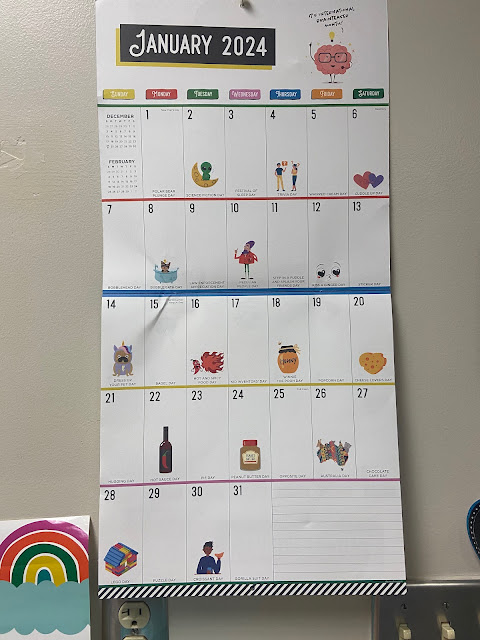
Today is "National Pizza Day!"  These five words will cause students to begin thinking, talking and asking questions about the topic.  These special days, which occur every day, are ideal topics for students to practice inquiry-based questions, make connections with one another, serve as writing prompts and go perfectly with library resources and standards.  

Here are some ways that I have used them:

  • Share a joke, fact, or quote about the topic
  • Find a GIF to help illustrate the special day, or show the GIF first and ask students to try to guess the special day
  • Direct students to a database to find out more about a topic
  • Guide students to write open-ended questions about the topic
  • Connect the topic to a current event 
  • Challenge students to create a survey about the topic
  • Collect books, both fiction and nonfiction, from your library collection and invite students to check them out (Twitter post example)
  • Put out realia that goes with the topic and allow students to handle the items
  • Play a song, game or listen to a poem or speech about the topic, like in Dean Koontz's book, Every Day's a Holiday:

  • Make an iMovie, TikTok or Instagram Reel of your display
  • Use the topic to ask students to choose between "This or That" options 
Here is my SLIDESHOW of days I have used with students, in person and during distance learning. 


Some questions you may have about this approach:

Q: Where do you find what special day it is?

A: Type "TODAY IS" in an Internet browser window and click on the search results.  Or bookmark: National Today  ,  National Day Calendar ,    Days of the Year


Q. How do you choose what to feature?

A. You know your student development levels and what is appropriate as an educator. Think about how you would expect to use the topic: discussion only or a full lesson? 


Q. What if you have students who don't celebrate holidays?

A.  You can focus on historical events and famous people's contributions.


Q. Do you check every day or can you look ahead of time to plan?

A. I like to check on a daily basis but if I know a certain observance is coming up, I will pencil it in my plans ahead of time. 


Q. Can you go beyond special days, like special months or weeks?

A.  Yes! There is a librarian on LM_NET who posts each month with the title: January is..., February is..., March is..., etc. You can search the archives for those threads.


Q.  What if I don't have time to make a slideshow or display?  

A.  No problem! You can just tell the students without any visuals and ask them to describe their experience with the topic.


UPDATE: since I first published this on 8/18/2022, I have done more with this teaching idea:  

Shannon McClintock-Miller created a School Librarian Plan Book and it is full of special days that are school-appropriate! You can purchase it on the DEMCO website. 


Capstone Publishing  has a yearlong calendar that is in a single poster format that includes special days.  Contact your representative to request one to be sent to you. 


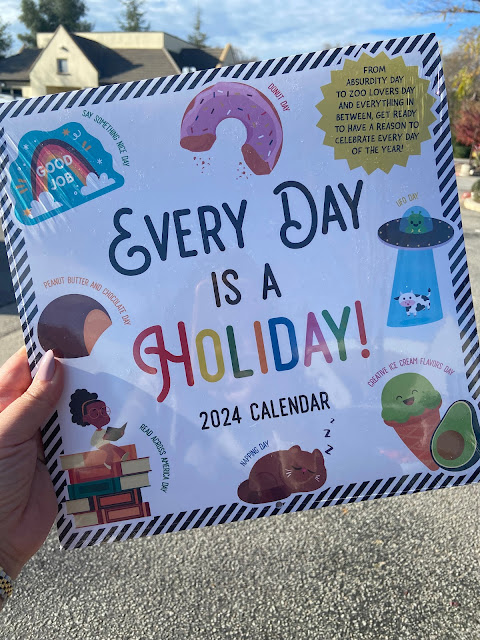
Calendars: You can also find wall calendars on this this topic! Here's one I found at a supermarket:


Egg Hunt for a topic:  I printed a list of the "May is..." list from LM_NET and cut apart the days to put into plastic eggs.  I hid the eggs around the library and told the students that they were to pick an egg and then read over the special days that are on inside of that egg.  From that list they are to choose one to find out more about. They can find a book that goes with the topic or they can make a visual about the special day to share with others.  Here are some photos from that lesson: 


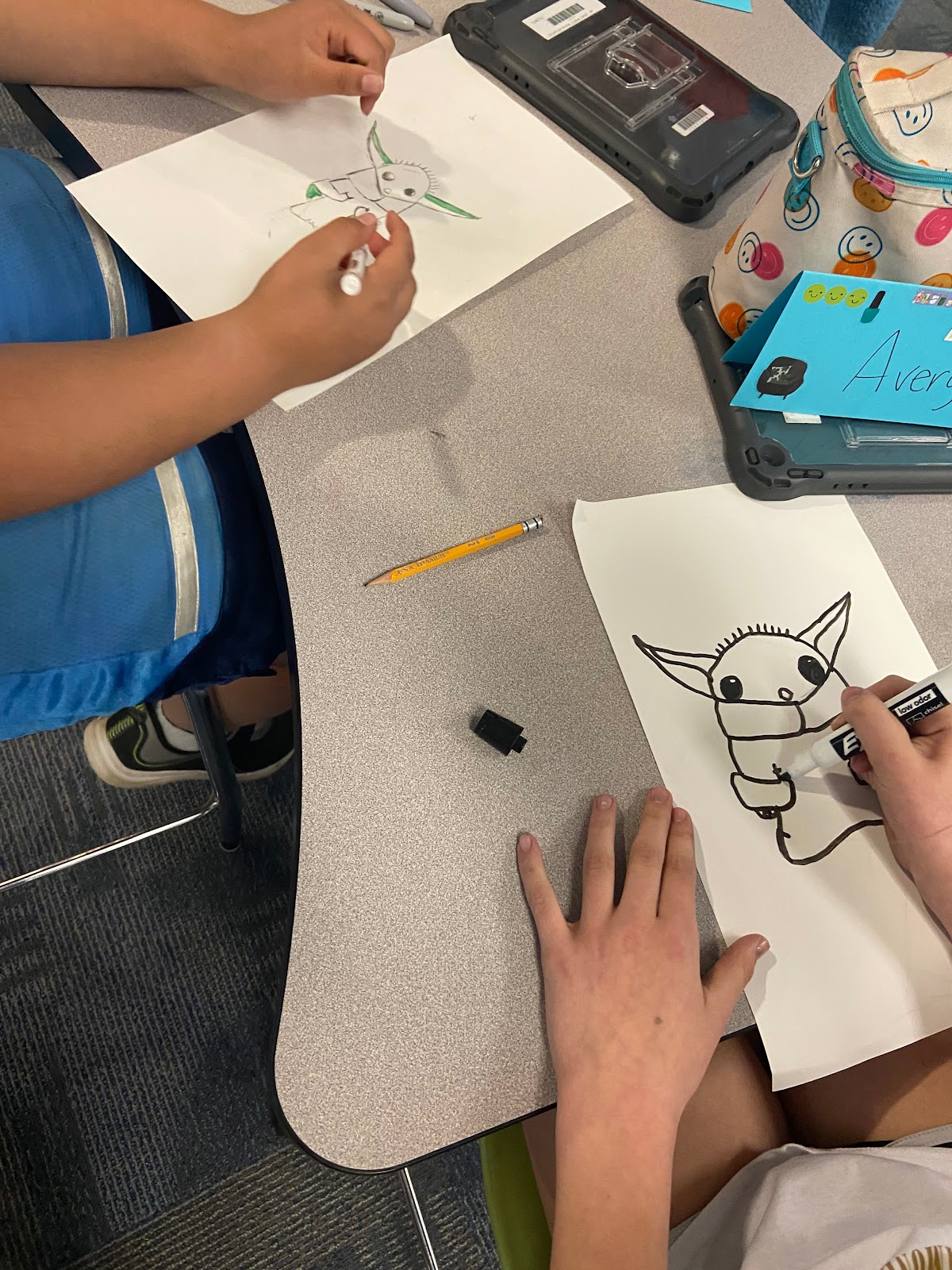
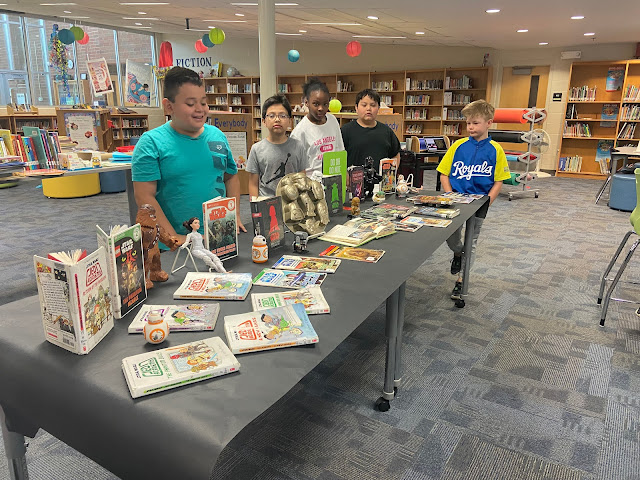
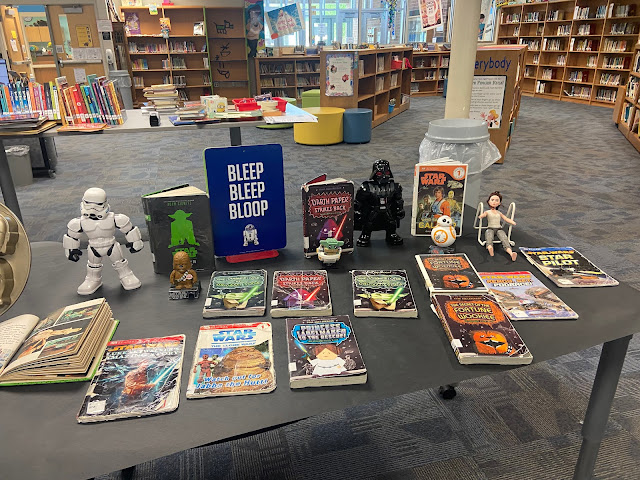
Student presentations:  allow students the time and space to share what they learned by teaching others and even planning a lesson around it. Here are my 4th-6th graders presenting on May the 4th:





Publish a Whole Class Book on a Topic:  My 6th graders used their special day and used it to go through an entire inquiry cycle.  


They developed questions about the topic, chose one on which to focus, set out to research their question and took notes over what they found. 

We used Google Jamboard to brainstorm and sign up for questions.  You can also partner students up or use Padlet. 


During the research process students monitored their learning and adjusted their question based on what they found out. 


 Finally, they each designed a page in a whole class book about the topic that would be available for reading in our school library.  


They added their resources to their individual pages or compiled them at the end of their book. As a class they brainstormed titles for their class book, critiqued each other's pages, and chose a book cover design for their published book created by one of their classmates.  


To print their final books, I used Wal-Mart's photo center, however, because of the template restrictions some of the pages didn't come out completely.  In the future I will use the BookCreator APP or get more funds to print the book on a larger scale.  

At the end of the process we had a book publishing party where students read all of the class books and reflected on what should change for the next time I do this with a class. 


Student reflections:


Read Every Day's a Holiday and ask students to create their own special day: 


The Menderist Blog published my experience with one instance of this approach in which one of my students felt seen. 

Check my Instagram (@thestoryspectator)  and Twitter (@ffarokhi) for my past displays of special days.

Do you currently use or have you used these in the past with students?  Please share your experiences and tips in the comments below! 


Sunday, June 26, 2022

Blackout: NYC modern-day romance

There are some authors whose books I will read no matter what.  Now imagine my delight when six of these writers collaborated on one book!  Blackout the anthology of short stories by the best writers of today: Dhonielle Clayton, Tiffany D. Jackson, Nic Stone, Angie Thomas, Ashley Woodfolk, and Nicola Yoon, is a must-have in any high school library collection.  The setting is exactly the same for all of the writers' tales: in NYC a massive blackout takes over the city and from there the stories take form.  From exes competing for the same summer internship to new crushes developing at a home for the elderly, there is a range of love stories for everyone to get into. There are even LGBTQIA relationships that develop with such care that no reader will be unaffected by them.  This is the perfect example of Black joy for young adult readers on up. 

What stood out to me about these stories is that they continued in the form of snapshots throughout the whole book.  It reminded me of a film or play taking place at the same time with fadeaway shots dimming at the close of a chapter and then picking up at the start of another one as the next part of the story unfolds for the characters there.  One might think this would be hard to keep track of all of the storylines, but this is where the writers truly shine in their depth of developing each character and their motivations.  One suggestion I have is to help those who have never been to NYC understand the layout of the boroughs, is to include a map to help with the movement of the storylines. The cover is also beautifully designed, by Erin Fitzsimmons, and has a surprise underneath the book jacket! I cannot decide how to display it in my bookshelf...


 Other anthologies that Blackout reminded me of are Black Boy Joy and Ancestor Approved. These are more for middle grade readers while Blackout is more for high school aged readers. 


Saturday, June 25, 2022

Jagged Little Pill: The Novel, how music inspires a story


Jagged Little Pill was one of the first albums I bought and when I listened to the music of Alanis Morisette, as a 13 year old, I could feel the emotion behind her lyrics.  In high school I won front row tickets to her concert when she toured with Garbage and even got to meet her backstage!  She was every bit of lovely and kind as I imagined.  It continues to be one of the best moments of my adolescence. Here I am, 27 years later, reading the young adult novel of the same name based on the Tony and Grammy Award-winning musical by Eric Smith, Diablo Cody and Glen Ballard.  This is the first novelization of a musical that I have read and it didn't disappoint!  


The story is told from alternating points of view of five teenagers: Frankie, Jo, Nick, Phoenix and Bella.  It's the middle of the school year in a Connecticut suburb and nothing will be the same after a party that gets out of hand when Bella gets violated and the evidence is spread across social media.  Everyone's expectations of how they should respond in the wake of this incident drives the story:

  • How will Nick, Bella's love interest who was supposed to look out for her act when his mother insists that he do nothing to jeopardize his college plans?  
  • How will Frankie, Nick's adoptive sister, and her best-friend-with-benefits, Jo, support Bella along with their social activist club to make sure justice is served?  
  • What can the new student, Phoenix, do to help as he falls for Frankie while taking care of his mom and hospitalized sister?
Using the musical and album, it's a journey for each character to get introspective as they risk losing the people they love in order to be true to themselves. The adults in the story have as many problems, if not more than the teens as they apply social pressure to everyone around them, including themselves.  This is a dynamic story where every character's choices have much to be debated.  Readers can think about how much race fits into their expectations of people's sexuality along with the #MeToo movement.  Who gets believed and why?  How do you communicate with someone with whom you've crossed the line of friendship? What do you do when you suspect your parent of having an addiction?

This book also stands out to me and will resonate with young adult readers because the authors interweave texting and chat conversations between the characters.  This is a more realistic way of storytelling as today's young people communicate in this way and will more likely read a book that includes this component of dialog.  


Teens can also choose an album or song that speaks to them and write a story idea inspired by the lyrics.  This type of writing prompt can help adolescents find the beauty in storytelling and even match other books with songs that would go along well with them!  As a fan of movie soundtracks, I love it when books name songs being played so I can play them and the story comes alive in a different way.  Literacy is about so much more than the words the page. It's a complete sensory experience if you allow yourself to engage in it. Smith includes a link to the cast recording so readers can listen to it for themselves:


Now that I have read the novel I am ready to watch the musical!  


Wednesday, June 22, 2022

Lotería: free will or fate?


I have always been fascinated by the Lotería cards and their images, but have never learned about them.  When I heard about Karla Arenas Valenti and Dana Sanmar's middle grade chapter book, Lotería, I knew I had to read it.  Not only did I learn more about the cards and the game itself, but the story taught me about Mexican mythology, folklore, traditions, and beliefs.  This book will intrigue middle grade readers who like stories about family and high stakes adventures.

In Mexico, a young girl named Clara has no idea that she's the center of a Lotería game between the ultimate players, Life and Death. As they shuffle the cards and begin to play, Clara's life continues with the integration of the symbols from the cards, except they have life-altering consequences for her. When her cousin Estaban goes missing, she must go after him and against all odds, do everything she can to send him back home safely.  This story is full of powerful questions about fate, free will, and human determination. Sanmar's illustrations enhance the story and bring the events to life in the eyes of the reader. For example, at one point a character's hair turns silver and I couldn't believe it! The illustration helped reinforce this shocking twist in the story. 


Clara's choices will make readers think about deep philosophical questions long after they have finished the story.  

After reading the book, I found a dual-language picture book called, Playing Lotería (El juego de la Lotería) by René Colato Laínez and Jill Arena.  


The story is about a young boy who doesn't want to stay with his grandmother because his Spanish language skills are weak. When he arrives she whisks him away to a fair in the plaza where she leads a game of Lotería. He is mesmerized by the phrases she uses that match the images on the cards. This inspires him to learn them and later when they are in her home she teaches him and he even teaches her English.  The rules for the game are included in the end of the book.  


I would use both of these books with my students and daughter.  Children can explore the images, phrases and even make their own.  They can also play the game which is a lot of fun, too.  Even the Google Doodle was dedicated to the game one time! This game works for anyone because it's a visual game, the language component isn't as necessary.  The act of playing the came together in a community is what is most important.  

Wednesday, April 6, 2022

Slug Days: a day in the life of a girl with Autistic Spectrum Disorder


Slug Days by Sara Leach and illustrated by Rebecca Bender, is a slim read at just 116 pages, however, Leach leaves much to be considered after the story is through.  The main character, Lauren, is in elementary school, and she has Autism Spectrum Disorder (ASD) which includes Asperger's Syndrome.  Her brain works differently than others, a term known as neurodiverse, therefore, she has to work extra hard at remembering rules for how to behave at school and at home.  Lauren's range of emotions guide this story, as it is told from Lauren's point-of-view.  Her relationship with her classmates, teachers, bus driver, parents, and sibling are all on display as Lauren navigates her daily schedule.  

As a parent and educator, this is a story I recommend to others in order to consider how a person with ASD may be interpreting the world.  The author, Leach, is a former educator who writes from experience of having students with ASD and I, too, can say that the story's portrayal of Lauren is authentic.  This is also a great story for elementary-age and middle-grade readers to read, listen to, and discuss in order to build empathy.  When they are in their daily lives, are they mindful of others' neurodiversity?  How would they respond if they were in Lauren's class? The story leaves much to be discussed and readers can note how others they know who have ASD are similar or different from Lauren.  

Another part that drew me to this story were Bender's detailed illustrations.  They help tell Lauren's story, especially her feelings of anticipation, joy, frustration, fear, etc.  The book would not be the same without them. I can see my students wanting to draw Lauren and her "slug and butterfly days" to show what makes her feel uplifted or down.  

In honor of Autism Awareness Month in April I decided to read this book that I had added to my school's library collection earlier this year. It should really be a whole-staff read in all schools so that more educators can have a better understanding of ASD.  I was happy to learn that Leach & Bender continued Lauren's story with two follow-up books in this series:


Here are more books featuring characters with ASD:

If you have more to share please leave the titles in the comments below! 

Ghost in the Night: a spooky story for preteens

  Ghost in the Night by award-winning author, Tiffany D. Jackson, is a middle grade chapter book that is perfect for readers who want an in...