Search This Blog

Showing posts with label inquiry. Show all posts

Thursday, August 18, 2022

Teaching idea: "Today is..."


Today is "National Pizza Day!"  These five words will cause students to begin thinking, talking and asking questions about the topic.  These special days, which occur every day, are ideal topics for students to practice inquiry-based questions, make connections with one another, serve as writing prompts and go perfectly with library resources and standards.  

Here are some ways that I have used them:

  • Share a joke, fact, or quote about the topic
  • Find a GIF to help illustrate the special day, or show the GIF first and ask students to try to guess the special day
  • Direct students to a database to find out more about a topic
  • Guide students to write open-ended questions about the topic
  • Connect the topic to a current event 
  • Challenge students to create a survey about the topic
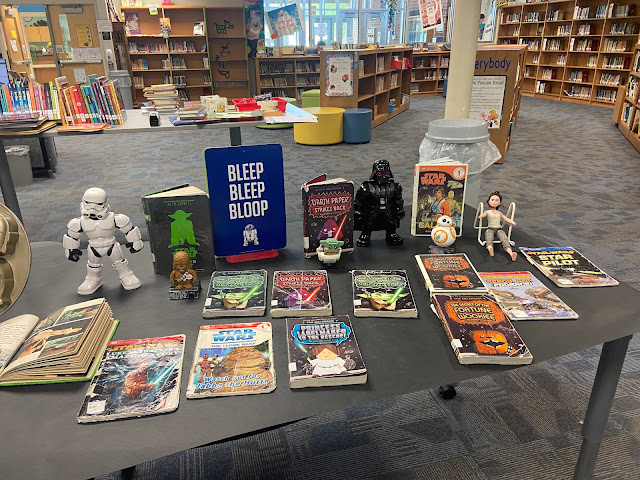
  • Collect books, both fiction and nonfiction, from your library collection and invite students to check them out (Twitter post example)
  • Put out realia that goes with the topic and allow students to handle the items
  • Play a song, game or listen to a poem or speech about the topic, like in Dean Koontz's book, Every Day's a Holiday:

  • Make an iMovie, TikTok or Instagram Reel of your display
  • Use the topic to ask students to choose between "This or That" options 
Here is my SLIDESHOW of days I have used with students, in person and during distance learning. 


Some questions you may have about this approach:

Q: Where do you find what special day it is?

A: Type "TODAY IS" in an Internet browser window and click on the search results.  Or bookmark: National Today  ,  National Day Calendar ,    Days of the Year


Q. How do you choose what to feature?

A. You know your student development levels and what is appropriate as an educator. Think about how you would expect to use the topic: discussion only or a full lesson? 


Q. What if you have students who don't celebrate holidays?

A.  You can focus on historical events and famous people's contributions.


Q. Do you check every day or can you look ahead of time to plan?

A. I like to check on a daily basis but if I know a certain observance is coming up, I will pencil it in my plans ahead of time. 


Q. Can you go beyond special days, like special months or weeks?

A.  Yes! There is a librarian on LM_NET who posts each month with the title: January is..., February is..., March is..., etc. You can search the archives for those threads.


Q.  What if I don't have time to make a slideshow or display?  

A.  No problem! You can just tell the students without any visuals and ask them to describe their experience with the topic.


UPDATE: since I first published this on 8/18/2022, I have done more with this teaching idea:  

Shannon McClintock-Miller created a School Librarian Plan Book and it is full of special days that are school-appropriate! You can purchase it on the DEMCO website. 


Capstone Publishing  has a yearlong calendar that is in a single poster format that includes special days.  Contact your representative to request one to be sent to you. 


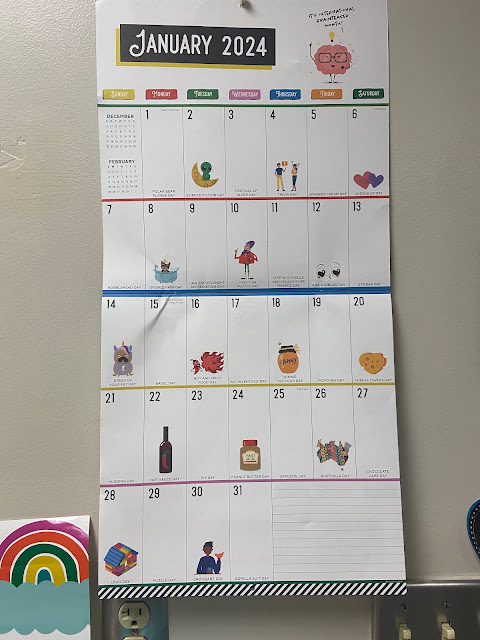
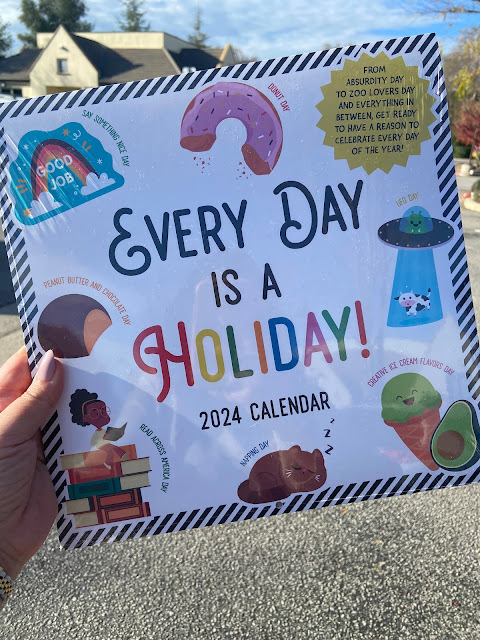
Calendars: You can also find wall calendars on this this topic! Here's one I found at a supermarket:


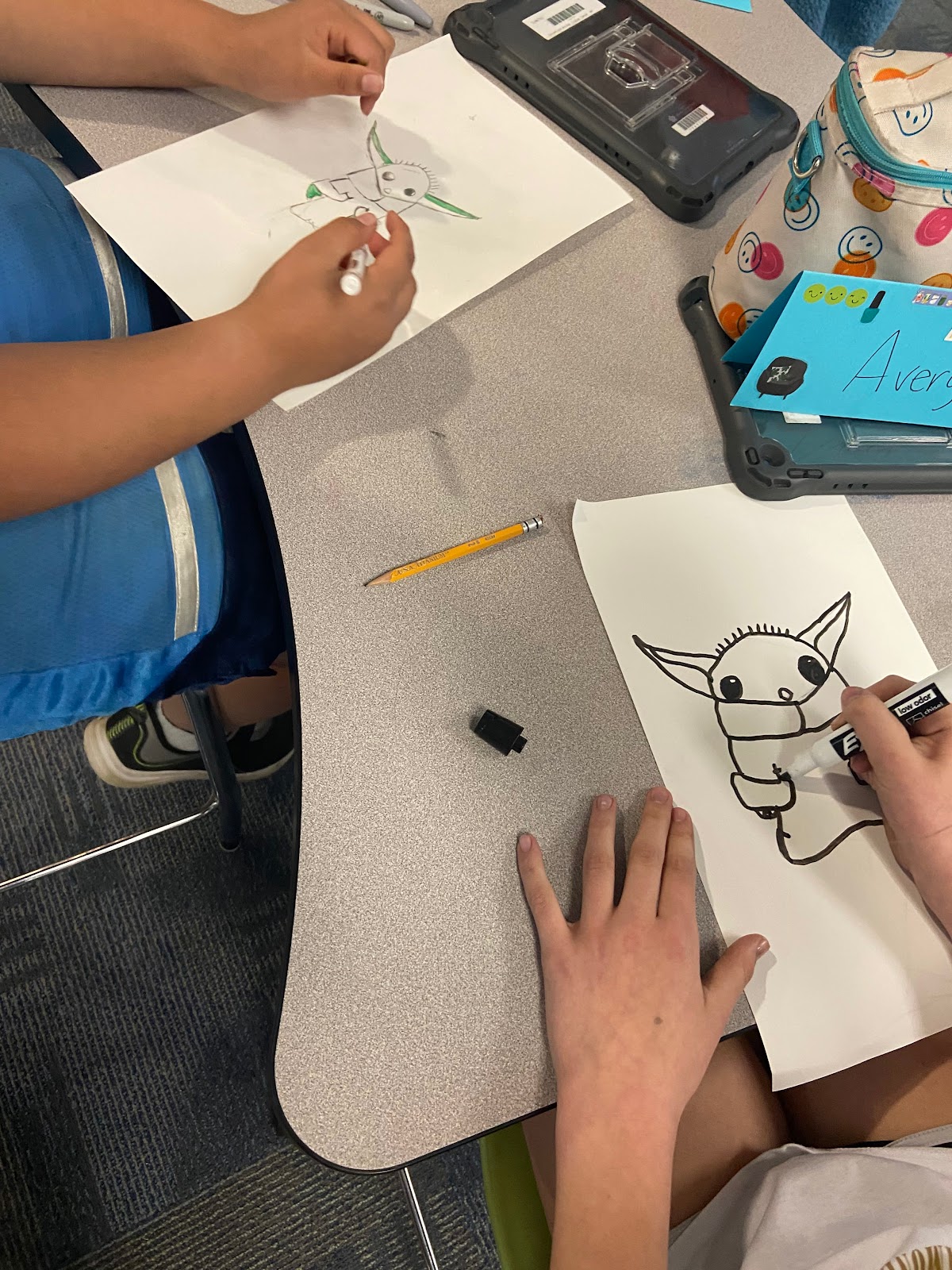
Egg Hunt for a topic:  I printed a list of the "May is..." list from LM_NET and cut apart the days to put into plastic eggs.  I hid the eggs around the library and told the students that they were to pick an egg and then read over the special days that are on inside of that egg.  From that list they are to choose one to find out more about. They can find a book that goes with the topic or they can make a visual about the special day to share with others.  Here are some photos from that lesson: 


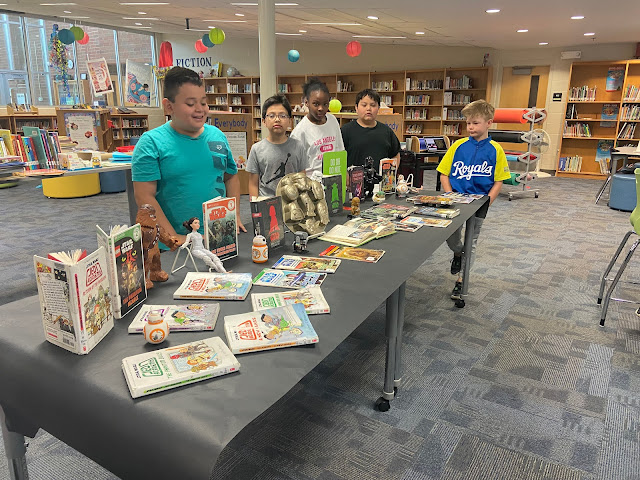
Student presentations:  allow students the time and space to share what they learned by teaching others and even planning a lesson around it. Here are my 4th-6th graders presenting on May the 4th:





Publish a Whole Class Book on a Topic:  My 6th graders used their special day and used it to go through an entire inquiry cycle.  


They developed questions about the topic, chose one on which to focus, set out to research their question and took notes over what they found. 

We used Google Jamboard to brainstorm and sign up for questions.  You can also partner students up or use Padlet. 


During the research process students monitored their learning and adjusted their question based on what they found out. 


 Finally, they each designed a page in a whole class book about the topic that would be available for reading in our school library.  


They added their resources to their individual pages or compiled them at the end of their book. As a class they brainstormed titles for their class book, critiqued each other's pages, and chose a book cover design for their published book created by one of their classmates.  


To print their final books, I used Wal-Mart's photo center, however, because of the template restrictions some of the pages didn't come out completely.  In the future I will use the BookCreator APP or get more funds to print the book on a larger scale.  

At the end of the process we had a book publishing party where students read all of the class books and reflected on what should change for the next time I do this with a class. 


Student reflections:


Read Every Day's a Holiday and ask students to create their own special day: 


The Menderist Blog published my experience with one instance of this approach in which one of my students felt seen. 

Check my Instagram (@thestoryspectator)  and Twitter (@ffarokhi) for my past displays of special days.

Do you currently use or have you used these in the past with students?  Please share your experiences and tips in the comments below! 


Tuesday, January 11, 2022

Author/illustrator Spotlight: Steve Jenkins


I didn't envision my first blog post of 2022 being in honor of someone who has passed away, but here we are.  The world lost an artist today whose work will go on to resonate with readers forever.  Steve Jenkins has been my go-to nonfiction author and illustrator the entire time that I have been in education.  His picture books spark curiosity, conversation and always lead to students sharing stories about themselves.  In his 80 books he has published, Jenkins focused on scientific topics found in nature and presented those in brightly formed paper collages that look like photographs, they are so well done!

Usually my second grade classes have the chance to study Jenkins' work for several weeks and from then on they can always be found returning to his books, like old friends, again and again.  I first present Jenkins and his wife and work partner, Robin Page, and with students we explore his website that has his book covers on a virtual bookshelf.  


As I scroll through the virtual bookshelf, students help me read the titles, we discuss what they notice about the cover designs and they share if they have seen or read the books before.  Then I show them what books we have in our library collection and they are eager to get their hands on them.  I read aloud from the ones they react to the most. We pass them around and as the students browse they show one another what they find interesting and even try to call dibs on what book they want to check out.  


Finally it's time for students to pick a book that inspires them to create a collage in the style of Jenkins.  We watch a video of Jenkins working and we describe together what he is doing.  As the students notice that he first creates a rough sketch, then using his sketch he makes a larger version with glue and layers of paper.  They cannot wait to dive in and try it themselves!  


For further extension, I've had students use an online encyclopedia or website to add facts to their collage.  Other students add more details in terms of background images and additional scenery to add to the setting.  Some write poems and stories inspired by their collage.  Others simply enjoy looking at what their classmates created and showing them what they made.


I hope that this gives some teachers, librarians, and families ideas for how to use Steve Jenkins' books with their children and students. I know that I will continue to do so, year after year, not because he is an award-winning illustrator, which he is, but because he makes learning memorable for readers of all ages.  


Sunday, September 5, 2021

The Mushroom Fan Club: putting the FUN in Fungi!


 The Mushroom Fan Club, a nonfiction picture book written and illustrated by Elise Gravel is a delight for all of the senses.  We have Gravel's popular nonfiction  Disgusting Critters series   in our school library and it's highly popular with our students, so when I spotted this book in our local comic book store, Chops Comics, I knew I had to take a closer look!

Gravel takes the reader along with her and her daughter as they venture into the woods looking for some mushrooms. She adds diagrams that help readers learn the names of the parts of the mushrooms and differentiates among popular types they have encountered on their hunts.  


The best part is that Gravel brings personality to the mushrooms so readers can remember the information, connect with it and share what they've learned with others.  I am going to use this book with my kindergarten - 2nd grade classes when we are working on the difference between fiction and nonfiction.  I've used her book, The Fly, for this learning objective before and the students love to listen to the facts about flies, which they see everyday.  

The Mushroom Fan Club offers many opportunities for interactive listening and follow-up activities.  My favorite parts of the book are that there are actions that readers can do along with the mushrooms.  For example, Gravel's daughter stomps on puffballs to help spread their spores for reproduction, so readers can act out stomping, just like her daughter.  


There are also species of mushrooms that Gravel does not get to describe, she leaves only the attention-grabbing names.  Readers can choose one to research, illustrate and share a fact with the community.  Or they can draw what they think the mushroom would look like based on the clues in the name and then they can look up the actual one to see how close they were!


Readers can, of course, walk outside and look for mushrooms as a follow-up and document what they have found.  They can learn about what mushrooms grow in their area.  We are lucky in our town to have a mushroom hunting club and at our farmers' market, many mushroom growers who are happy to share their knowledge about mushrooms.


Finally, Gravel adds instructions on how to do a spore print which is perfect for a classroom art activity.  All you need are mushrooms, paper and a glass or bowl. 


 I'm looking forward to reading this book with my students and encouraging them to get outside to look for mushrooms.  I'm incredibly impressed with anything that Gravel has written so I feel lucky to have found this copy nearby! It's a must-have for school libraries, science classrooms and home libraries.


Thursday, June 17, 2021

Wilderlore: The Accidental Apprentice, a magical adventure


Wilderlore: The Accidental Apprentice, a middle grades fantasy chapter book by Amanda Foody is perfect for fans of Harry Potter and The Girl Who Drank the Moon.  


Barclay is an orphan who wants to belong so badly that he's willing to be the apprentice of a mushroom farmer in order to have a decent shot at a respectable future in his sad, paranoid town of Dullshire.  The townsfolk have strict rules and are protecting themselves against the magical and dangerous beasts that lurk in the woods. (The same ones that killed Barclay's parents.)

When he accidentally bonds with a mysterious and wild beast, Barclay will stop at nothing to try to get back to his old life.  His journey will take him deep into the woods to an unbelievable world of power, lore and untrustworthy types who take advantage of Barclay's naiveté and eagerness to remove his bond.

Viola, a lore keeper who seeks out dangerous beasts, offers to help Barclay.  He is unsure whether to trust her and her little dragon beast, Mitzi, or not.  With a magical competition starting that could be Barclay's ticket to return to Dullshire, he must risk everything.  Will he finally find a place in the world where he belongs in the magical wild or will he go back to a lonely, ordinary, yet, safe life in Dullshire?

A humorous mystery full of action, imagination and memorable characters. This is a must-have for middle grade readers who enjoyed fast-paced, fantasy adventure with loads of funny banter and a hint of mystery.

Families, librarians and teachers can use this book in many ways to engage readers.  To get readers hooked, the  first chapter of the book is perfect for a read aloud. It is going to make them want to read on to find out the fate of poor Barclay! Hear the author read from chapter one below:


Foody also goes into much detail about mushrooms so it would be excellent for readers to do a mushroom inquiry that they can share with others what they were curious about and what they discovered.  Another interesting part of this story are the rules in Dullshire.  They are arbitrary and silly so readers can research odd laws where they live and discuss why they think these laws were even made in the first place.  Finally, the reader can design and make a beast warding charm like Barclay's, made out of rope, herbs and twigs or they can make their own based on what they find out in nature.

The best news to share is that Foody has the second book in the series coming out in March 2022!


Photograph (c) Diane Brophy Photography.


Sunday, May 23, 2021

Accidental Lessons in Gender Inequity in Asia: Ruby's Wish & Ten Little Dumplings

 Every year I share books that show celebrations of the Lunar New Year. This year I came across the picture book Ruby's Wish by Shirin Yim Leos (Bridges) and illustrated by Sophie Blackall and wanted to use it for reasons beyond how the family in the story celebrates.  


It is a fictional story that is based on the author's grandmother, who while growing up in China, aspired to attend university but was not expected to because she was a girl.  


I asked students to first consider how people celebrate holidays around the world and we found similarities between their ideas and how Lunar New Year is celebrated.


We watched a clip and looked through the photos from the Sacramento Bee about how Asians in America celebrate: 


Finally, we read Ruby's Wish and I asked students to think about these points before they listen to the story:


After listening to the story, students used a template in Seesaw to respond to the questions. Students were shocked to learn about the gender bias against females and wanted to learn more.  They wondered if this was still happening, what other countries did this exist, how people were trying to change that mindset worldwide.


This led me to be on the lookout for more books that portray this gender inequality and I found Ten Little Dumplings, a picture book by Larissa Fan and pictures by Cindy Wume.


This is a book, again, based on the author's family, except this time this story takes place in Taiwan.  One boy is supposed to bring great luck to a family and this family has ten sons!  In the end, the reader finds out that the family also had a daughter. It's told from her perspective so the reader wants to go back from the beginning and see if they can spot her in the beautiful illustrations.  


Fan writes at the end that she wonders about "who is left out of the stories we are told and why.  Ten Little Dumplings is my attempts to reveal another viewpoint to a traditional tale, to write in someone who has been left out."  This would pair well with my students who heard Ruby's Wish and they can compare the stories with one another.  This could also launch an inquiry unit for students to go out and seek answers to their wonderings about gender inequality in today's world.  Whenever I share with students the gender inequality in various other parts of the world they think I am talking about hundreds of years ago, not modern-day times.  Stories like these will open up the minds of our students as they explore their thinking about this important issue.

If you've had lessons or used books on this topic with children and middle schoolers, please add your titles and ideas in the comments.  


Wednesday, May 19, 2021

A "How-to" Unit for technical writing & storytelling for elementary/middle


Students are naturally curious about how certain events happen.  It's a prime topic for teachers and librarians to use to create at the center of an inquiry lesson.  The class listens to read-alouds of companion texts that show a how-to in various formats.  Then they choose a topic in which they want to teach others how to do that specific task.  Finally, they will pick the way they want to communicate that information.  Teachers can provide a list of options for the differentiated products: a video, a stop-motion demonstration, a flow-chart, a comic/graphic drawing, an informational picture book, a zine, etc.

I did this with 3rd graders and we had rich discussions, humorous moments of sharing personal observations and experiences, and an authentic audience awaiting one another's projects.  There are numerous ways you can structure this lesson, but here is what I did and it worked well:


I began with telling them a personal story about how much I love avocados but they are tricky because if you buy too many at once they get ripe quickly and you must use them up or else they go funky.  Students began sharing all of the ways that they relate to this, too.  I asked them where I could find ideas on how to use up my avocados.  Students suggested asking cooks, looking in books and on the internet.  I told them that was listening to the radio and heard a story about using leftover food to reduce food waste and I played for them the video clip below:


We watched it once for information and again on MUTE and I paused the frames and we noted how the information was being communicated:  images, videos, bulleted lists, demonstrations, etc.

Then I showed them a number of how-to books that we had in our library collection:


Then we sorted them into NONFICTION and FICTION piles.  One of the FICTION books we read aloud was How to Walk an Ant by Cindy Derby.


During the reading we noted how the author incorporated facts and information in an entertaining way.  After reading the story students brainstormed ideas for both nonfiction and fictional how-to topics.


Then they narrowed down their list to their top choice and began their writing process. I had them use a poster paper folded into squares and put each step in each square.  If they didn't have accurate information they had to research and cite their resource in their final product.  

They had a lot of fun with this and we enjoyed learning from each other.  This also encompasses many teaching and learning standards so it's an excellent writing prompt that engages students.


I will definitely do this again next year but extend it over the course of several weeks so they can make their products and we can have a celebration by inviting other grade levels to learn from each other. 

 If you have suggestions for improving this idea please let me know in the comments below!


Dasia (Forever)-a middle grade novel tackling serious topics

  Dasia (Forever) by Nic Stone , a middle grade novel sprinkled with letters in a verse format, provides a raw, emotional perspective of Da...