Today is "National Pizza Day!" These five words will cause students to begin thinking, talking and asking questions about the topic. These special days, which occur every day, are ideal topics for students to practice inquiry-based questions, make connections with one another, serve as writing prompts and go perfectly with library resources and standards.
Here are some ways that I have used them:
- Share a joke, fact, or quote about the topic
- Find a GIF to help illustrate the special day, or show the GIF first and ask students to try to guess the special day
- Direct students to a database to find out more about a topic
- Guide students to write open-ended questions about the topic
- Connect the topic to a current event
- Challenge students to create a survey about the topic
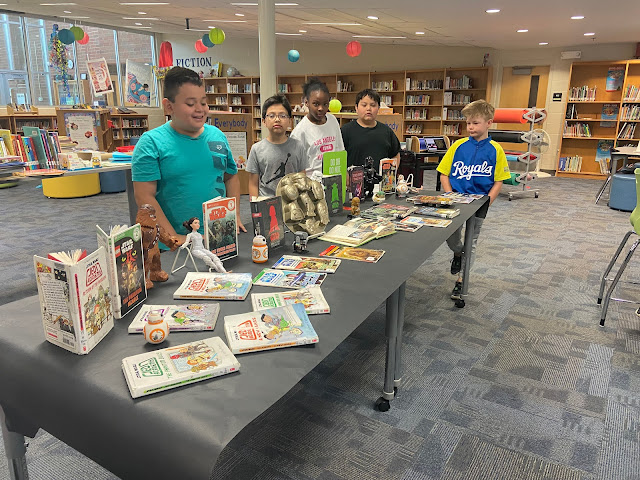
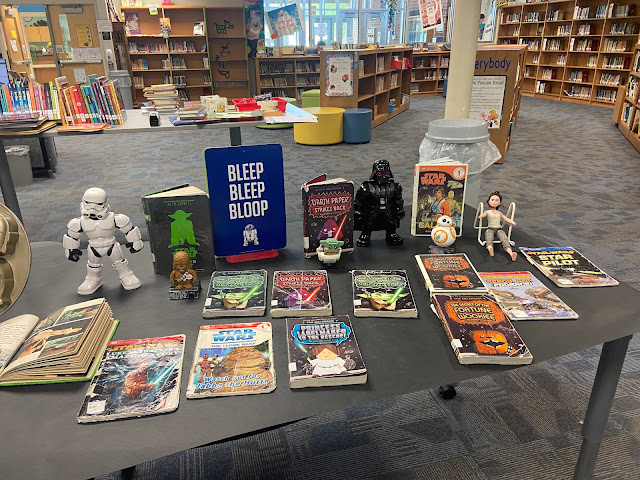
- Collect books, both fiction and nonfiction, from your library collection and invite students to check them out (Twitter post example)
- Put out realia that goes with the topic and allow students to handle the items
- Play a song, game or listen to a poem or speech about the topic, like in Dean Koontz's book, Every Day's a Holiday:
- Make an iMovie, TikTok or Instagram Reel of your display
- Use the topic to ask students to choose between "This or That" options
Here is my
SLIDESHOW of days I have used with students, in person and during distance learning.
Some questions you may have about this approach:
Q: Where do you find what special day it is?
Q. How do you choose what to feature?
A. You know your student development levels and what is appropriate as an educator. Think about how you would expect to use the topic: discussion only or a full lesson?
Q. What if you have students who don't celebrate holidays?
A. You can focus on historical events and famous people's contributions.
Q. Do you check every day or can you look ahead of time to plan?
A. I like to check on a daily basis but if I know a certain observance is coming up, I will pencil it in my plans ahead of time.
Q. Can you go beyond special days, like special months or weeks?
A. Yes! There is a librarian on LM_NET who posts each month with the title: January is..., February is..., March is..., etc. You can search the archives for those threads.
Q. What if I don't have time to make a slideshow or display?
A. No problem! You can just tell the students without any visuals and ask them to describe their experience with the topic.
UPDATE: since I first published this on 8/18/2022, I have done more with this teaching idea:
Capstone Publishing has a yearlong calendar that is in a single poster format that includes special days. Contact your representative to request one to be sent to you.
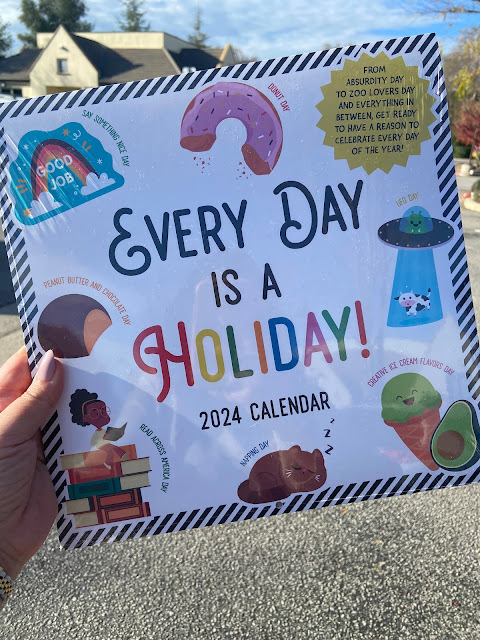
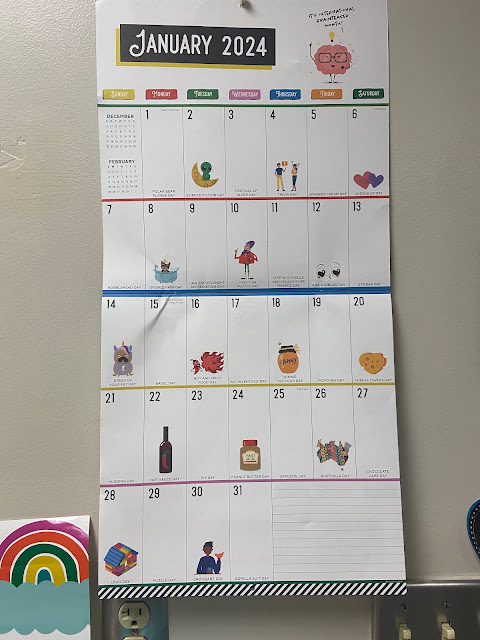
Calendars: You can also find wall calendars on this this topic! Here's one I found at a supermarket:
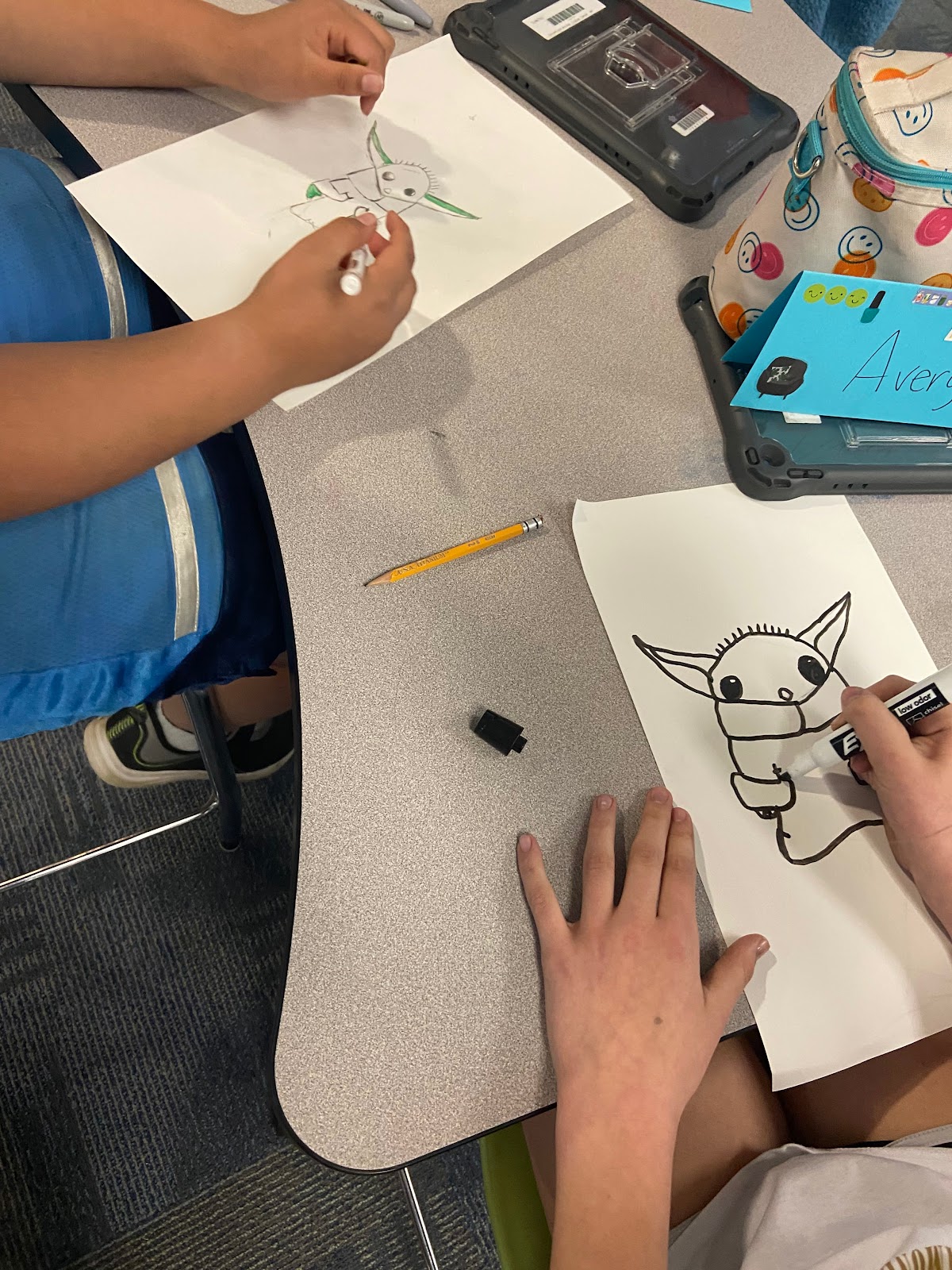
Egg Hunt for a topic: I printed a list of the "May is..." list from LM_NET and cut apart the days to put into plastic eggs. I hid the eggs around the library and told the students that they were to pick an egg and then read over the special days that are on inside of that egg. From that list they are to choose one to find out more about. They can find a book that goes with the topic or they can make a visual about the special day to share with others. Here are some photos from that lesson:
Student presentations: allow students the time and space to share what they learned by teaching others and even planning a lesson around it. Here are my 4th-6th graders presenting on May the 4th:
Publish a Whole Class Book on a Topic: My 6th graders used their special day and used it to go through an entire inquiry cycle.
They developed questions about the topic, chose one on which to focus, set out to research their question and took notes over what they found.
We used Google Jamboard to brainstorm and sign up for questions. You can also partner students up or use Padlet.
During the research process students monitored their learning and adjusted their question based on what they found out.
Finally, they each designed a page in a whole class book about the topic that would be available for reading in our school library.
They added their resources to their individual pages or compiled them at the end of their book. As a class they brainstormed titles for their class book, critiqued each other's pages, and chose a book cover design for their published book created by one of their classmates.
To print their final books, I used Wal-Mart's photo center, however, because of the template restrictions some of the pages didn't come out completely. In the future I will use the BookCreator APP or get more funds to print the book on a larger scale.
At the end of the process we had a book publishing party where students read all of the class books and reflected on what should change for the next time I do this with a class.
The Menderist Blog published my experience with one instance of this approach in which one of my students felt seen.
Do you currently use or have you used these in the past with students? Please share your experiences and tips in the comments below!