Search This Blog

Showing posts with label social justice. Show all posts

Wednesday, July 22, 2026

Juvenile Crime—A Look Behind the Curtain


Anger is Only a Shadow , a contemporary young adult novel by award-winning author Elizabeth Acevedo, is a necessary and moving story for anyone who has dealt with mental illness in their families, with being a multicultural person or known youth with criminal backgrounds.  The main character is a D.C. high schooler, Lil, the middle child of immigrant parents from the indigenous Taino people of El Salvador and the Afro culture of the Dominican Republic. Most of the story is her experience in a youth detention center while waiting for her court hearing and the rest of the story is what her life is like after being released to her family but with an ankle monitor. Her older brother, who has always been looking after her, has gone away to college, but his behavior has changed and not in a good way. She feels burdened with finding out what is going on with him and her parents aren’t sure what to do. 

Lil reveals the positive influence that the poetry teacher at the youth detention center had on her through the “I Am From” writing prompts she is assigned. Even after leaving the center she still writes her own poems that reflect what’s going on in her mind at different points in the story. This is the strongest element of the book for me. Through Lil’s writing, her character goes through a process of seeing what is holding her back and getting to the place where she belongs. Even with several setbacks, the transformation that Lil goes through offers hope to others going through similar circumstances. 

Another strong aspect of the story is Lil’s relationship with her Abuela who is going through memory loss. She sometimes speaks in her native language and this reminds Lil of how much her brother loved the stories that her Abuela told them. This connection to her heritage is what ends up being a big factor in helping her brother at a dire time. Prior to reading this book I had read stories about characters with mental illness, however this is the first time I have read about a younger sibling who witnesses her older sibling’s mental health decline.  Acevedo provides additional mental health resources at the end of the book. 

Of course Lil’s time returning to school after the fallout of her crime is also an important part of her story. As a teacher myself, it reminded me of how much may be going on in the lives of my students that affects their behavior at school. It also makes me question some of the school rules that are strictly enforced without being able to make exceptions for students with special needs. Although it was sad to see that her two best friends, who were with her during her crime, were no longer at her school, it made her pivot to others that she had always been curious about from afar. 

I would highly recommend this book to anyone age 13 and up. Acevedo’s writing is reminiscent of Neal Shusterman and Angie Thomas, as they all express their stories with similar heart and authenticity. 

Thanks to NetGalley for sharing an advanced reader copy for me to read and review before the book is published in September 2026. 

Sunday, May 31, 2026

Building 903: a future of control without creativity


An intriguing opening that immediately invites questions of what happened to society? 

Electronics have taken over, nobody writes with their hands anymore. No stories exist, no playgrounds, no pets, no music or singing unless it's the anthem,  a continually surveilled society where people can be "taken away" and centenarians abound. Baby names were assigned a theme annually, only one world currency is used. There's quick corrective surgery from knee replacements to skin tightening. The leader who has been in power for decades runs unopposed and the voting age is raised to 27. Compulsory retirement at 100, except for the leader. Campaigning is illegal and punishments are tattooed to bodies. Everyone is rated by their cognitive abilities.  These are just glimpses into the world that Lois Lowry creates in her new book, Building 903

Set in the year 2099, this story focuses on the mysterious disappearance of one twin sibling, Theo, and the repercussions his absence has left his family, particularly for the remaining twin, Tessa. Tessa's 135-year-old neighbor may have some answers about where Theo went and when she leaves some clues with Tessa, the truth begins to be revealed.  Tessa must finally talk to her parents about the grief they all feel and try to find Theo before it's too late.

The main themes of the book are its greatest strengths:  censorship, activism, love and hope.  Each character presents another important facet to the story and without the cooperation of all of the characters, the satisfying conclusion would not be able to exist.  This story lends itself well to a book club or literature circle because each twist of the story needs to be discussed with other readers. From the very first page of the book the scene is set for a big reveal and Lowry does not disappoint!  


Much like her award-winning book, The Giver, and the rest of the series, this story will resonate with multiple generations of middle grade readers, teens and adults as they dive into the eerie, yet plausible world painted by Lowry. 


Saturday, June 25, 2022

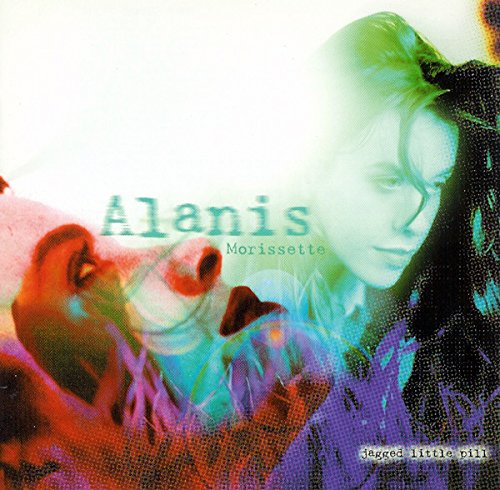
Jagged Little Pill: The Novel, how music inspires a story


Jagged Little Pill was one of the first albums I bought and when I listened to the music of Alanis Morisette, as a 13 year old, I could feel the emotion behind her lyrics.  In high school I won front row tickets to her concert when she toured with Garbage and even got to meet her backstage!  She was every bit of lovely and kind as I imagined.  It continues to be one of the best moments of my adolescence. Here I am, 27 years later, reading the young adult novel of the same name based on the Tony and Grammy Award-winning musical by Eric Smith, Diablo Cody and Glen Ballard.  This is the first novelization of a musical that I have read and it didn't disappoint!  


The story is told from alternating points of view of five teenagers: Frankie, Jo, Nick, Phoenix and Bella.  It's the middle of the school year in a Connecticut suburb and nothing will be the same after a party that gets out of hand when Bella gets violated and the evidence is spread across social media.  Everyone's expectations of how they should respond in the wake of this incident drives the story:

  • How will Nick, Bella's love interest who was supposed to look out for her act when his mother insists that he do nothing to jeopardize his college plans?  
  • How will Frankie, Nick's adoptive sister, and her best-friend-with-benefits, Jo, support Bella along with their social activist club to make sure justice is served?  
  • What can the new student, Phoenix, do to help as he falls for Frankie while taking care of his mom and hospitalized sister?
Using the musical and album, it's a journey for each character to get introspective as they risk losing the people they love in order to be true to themselves. The adults in the story have as many problems, if not more than the teens as they apply social pressure to everyone around them, including themselves.  This is a dynamic story where every character's choices have much to be debated.  Readers can think about how much race fits into their expectations of people's sexuality along with the #MeToo movement.  Who gets believed and why?  How do you communicate with someone with whom you've crossed the line of friendship? What do you do when you suspect your parent of having an addiction?

This book also stands out to me and will resonate with young adult readers because the authors interweave texting and chat conversations between the characters.  This is a more realistic way of storytelling as today's young people communicate in this way and will more likely read a book that includes this component of dialog.  


Teens can also choose an album or song that speaks to them and write a story idea inspired by the lyrics.  This type of writing prompt can help adolescents find the beauty in storytelling and even match other books with songs that would go along well with them!  As a fan of movie soundtracks, I love it when books name songs being played so I can play them and the story comes alive in a different way.  Literacy is about so much more than the words the page. It's a complete sensory experience if you allow yourself to engage in it. Smith includes a link to the cast recording so readers can listen to it for themselves:


Now that I have read the novel I am ready to watch the musical!  


Friday, February 18, 2022

From a Whisper to a Rallying Cry: Asian-American activism begins


From a Whisper to a Rallying Cry: The Killing of Vincent Chin and the Trial that Galvanized the Asian American Movement by Paula Yoo is an award-winning non-fiction, young adult book that looks deeply at the people and circumstances that launched activism for Asian-Americans.  Yoo uses primary sources and interviews from the 1980s to the present-day hate crimes against Asian-Americans due to the Coronavirus pandemic to put the whole plight of Asian-Americans in context.  This is a valuable book for U.S. History classes, social justice and law classes, as well as for teens and adults who want to learn more about other civil rights movements aside from the ones for Black people and perhaps the LGBTQIA+ communities. 

Detroit in 1982 was full of tension.  Tension between Asian-Americans and those in the automobile industry.  When a Chinese-American man, Vincent Chin, was brutally killed by two white men and the sentence was only probation and a $3000 fine, the Asian-American community organized to protest against this injustice.  Chin's wrongful death was the first case brought against someone's civil rights being violated.  The prosecutors retried the defendants claiming that their crime was racially motivated and that violated Chin's civil rights that were protected under the law.  What ensued was a years-long battle in and out of the courts with multiple law enforcement, attorneys, witnesses, and national figures for justice being pulled back in to find closure on the case.  

What stood out to me was how ordinary, everyday people got involved in the movement. For example, Mable Lim, an elderly woman who drove around Detroit with press releases shared that when she was younger she never stood up to the racism she encountered. "I accepted it, you're used to being excluded and treated differently."  Many readers may relate to Lim and her perspective, even to this day.  Marginalized groups benefit from learning about the past where coming together for a common cause brings strength to the community as a whole.

Another part of this story that was especially informative was how all-encompassing the movement became.  At first it was Chinese-American activists that then grew to Japanese-Americans, then the NAACP and Pacific Islander groups joined.  During a march an elderly Filipino man was asked why he joined and his reply encapsulated the feeling for justice, "If we don't stand together, we'll always be divided."  This book teaches the origins of the term Asian American and Pacific Islander.  Readers can better understand how these modern-day terms came about and how they are used today.

Finally, the true-crime aspect of the story is also a reason why I recommend it to young adults and adult readers.  Yoo writes in a narrative style similar to true crime podcast scripts that provide details to the reader about the background of each person involved in the case.  The courtroom scenes and judicial procedures are also notable because they were the cause of laws actually changing to ensure equitable sentencing procedures for future cases.  Readers are also not lectured at in this book. For example, Yoo doesn't state her opinions about the motivation behind the killing.  She lays out the evidence from both sides and that is what is also good to read.  How she handles the effects on the defendants' lives brought a more balanced approach to this story.

After reading this book readers will undoubtedly want to do their own research on the case and the people involved.  Yoo provides numerous sources for further reading, including the film, Who Killed Vincent Chin? Here is an interview from the Glendale Library that was done with Yoo:


Saturday, October 2, 2021

Hispanic Heritage Month Ideas


September 15 - October 15 is Hispanic Heritage Month and although we need to share Latinx voices all year round, this is the month that we can bring all of their books together in one place and celebrate.  Over the years I have done school-wide books and other times we focus on author studies for each grade level:

Kindergarten-1st grades: Juana Martinez-NealMatt de la Peña

2nd-3rd grades: Meg MedinaYuyi Morales, Pat Mora

4th-5th grades: Gary Soto, Duncan Tonatiuh, Pam Muñoz RyanMargarita Engle

Here are some specific books with lesson ideas:

Kindergarten - 1st grades


Prior the read aloud teach students how to say donkey in sign language. share that the author and illustrator, Anuska Allepuz is originally from Spain, and have them predict what the donkey eats that turns it green.  
After reading, go over the difference between fiction and nonfiction. What do they think this book is and why?  


Have the students choose a food for the donkey to eat and color their donkey the color of that food.  Students can also write the food and color on the template.


Before reading Moon Rope by Lois Ehlert, share that folktales often have a lesson and that this story is from Peru.  Review the animals that they will encounter in the story and have them act out the motions of the animals while they listen.  


After the story give each child a page with pictures from the book.  For example, here is one I provide:


Ask them to cut out the pictures and arrange them in order. They can number them or tape them to a piece of yarn for the full "Moon Rope" retelling experience.


Feel the Beat by Marilyn Singer and Let's Dance! by Valerie Bolling feature dances from Latin and South America.  Feel the Beat has a CD that comes with it, so students can listen to the poem with music.  Let's Dance can be read then students can get up and dance to Latinx music.  If you have shakers and maracas it's even better!
Here is an audio sample of Feel the Beat. 


2nd-3rd Grades


Mango, Abuela, and Me by Meg Medina and Angela Dominguez is perfect for making predictions and having students discuss all of the ways someone who speaks another language could feel.


Students share the words that they know in Spanish and learn the sign language for parrot. before listening to the story.   During the reading I like to share a prop of a suitcase with a snapshot and red feather like Abuela shares with Mia.  Students like to handle the objects after they hear the story.  Once the read aloud is complete, students can discuss the ways that language pushed the characters apart and how they were brought together.


As an extension of the book, students can make their own parrots out of paper or other STEM building materials.


Dreamers by Yuyi Morales is a beautiful story to share with students.  I ask students what it is like to move to another country.  Students discuss the wide range of feelings an immigrant could have.   Prior to reading the book we listen to Morales give background on her story and what her drawings symbolize.


After listening to the story, students brainstorm what gives them their identity.  Then they write a bio poem on a template provided by the teacher. You can get it HERE.


All the Way to Havana is a special picture book by Margarita Engle and Mike Curato.  Students get to learn about Cuba by listening to the author's note about how prior to 1959 there was a car ban in the country.  

There's a great trailer show:


As the book is read, it's really a poem, so the students can chant the sounds they hear.  After reading the story students can build a car of their design using the materials in their STEM bins.  When they are finished they can walk around and look at each other's creations.  TeachingBooks.Net also has an audio clip of Curato explaining how he went about creating the illustrations for the story.


4th-5th Grades


Students may recognize the skulls or caleveras from the movie Coco and associate it with The Day of the Dead.  Ask the students how it became so popular and invite them to listen to biography picture book, Funny Bones by Duncan Tonatiuh.  I give students a biography graphic organizer to use to write their notes and sketch their images.  


Students can listen to Tonatuih on TeachingBooks.Net explain his process for creating the illustrations.

After reading the story students can try to make their own calaveras out of paper plates. HERE are the directions.


Other books by Duncan Tonatiuh that I like to share are Separate is Never Equal and Dear Primo: 


Frida, a picture book by Jonah Winter and Ana Juan, is a beautifully told and illustrated story about artist, Frida Kahlo. Since I use this book with older readers I like to use the idea found on Common Sense Media  called, Queen of the Selfies.  Prior to reading the story I ask students to define what a selfie is, what makes them like or dislike one and how long they think selfies have been around.


Then I ask them what they know about Frida Kahlo:


We look at her self-portraits and try to guess what her life was like:


We read the book aloud and go back to her paintings to find clues to what she endured:


Finally, students are challenged to create a self-portrait using Frida's style of including important feelings, objects, and symbols. We use the app PicCollage on our iPads to do this. Here is my example:


Gary Soto's book of poetry, Neighborhood Odes is excellent for this age group.  Prior to reading  the poems, students brainstorm ideas from their neighborhood, family, friends, or objects they own.


I share that in Neighborhood Odes, Gary Soto focuses on these categories.  I challenge the students to try to match up the titles of the poems and the papel picado cutout-illustrations based on clues.  


Then I show them Soto's news story about the museum that opened in his honor:


We read one of his poems, "Ode to Pablo's Tennis Shoes" and students underline the parts that stand out to them.  They pick something from their brainstormed list and write an ode or a story about that idea.


As an extension we read his poem, "Oranges" that was made into a short film. After we read it, we watch the video and compare and contrast it to the poem.  


If students want to read a picture book by Soto, I recommend Too Many Tamales:


Shannon McClintock-Miller has created a Choice Board for students to explore, as well. If you have more titles you suggest please leave them in the comments!


Saturday, August 28, 2021

Hearts Unbroken: a young adult #CreekVoices tale of love and hate


Hearts Unbroken is a young adult chapter book written by New York Times best-selling author and former KU Jayhawk, Cynthia Leitich Smith.  Universal themes of caring about others resonates through each page.  

Lou's entering her senior year at a Kansas City high school and she's just broken up with her popular, jock boyfriend who made fun of her Creek heritage.  Lou's dedicating her time to focusing on school and her family, especially since her younger brother, Hughie, is a freshman and he makes it into the musical production of the Wizard of Oz to the dismay of many in the community who want to see white students cast in the big roles.  The town becomes divided on if it makes a difference as to who plays the characters and if those casting decisions affect the purity of Baum's story.  Hughie even gets threats in the mail that scare Lou.  Although Lou was definitely not on the lookout for romance, she is swept up in the arrival of Joey, the new Lebanese-American student who is working with her on the school newspaper.  Will she be able to follow her heart and make better choices that will strengthen her identity?

What stood out to me about this story was the network of community support that Lou has throughout her ups and downs.  Lou asks her father, how do you tell someone you care about them with the fear of rejection at hand?  He says,

"What I wouldn't give for this to be the worst problem you'll ever have.  But, pumpkin, caring about somebody isn't trivial.  It can keep you going."  

Readers can discuss times that they've had people express their care towards them and who they care about the most in the world.  

Another part of the story that I appreciated was the role of the librarian in the story!  It showed how librarians are trained to connect the right person with the right book.  For example, the librarian buys a book for Hughie, If I Ever Get Out of Here by Eric Gansworth of the Onondaga Nation.  Readers can ask their librarians for topics that interest them and have a conversation about books and authors that they may try out.  


The overarching theme is how racism seeps into the daily lives of minorities.  Lou talks with her classmates whose parents are leading the charge against people of color holding main character roles in the musical and the classmates confess that they hear racist conversations in their households.  They thought that Lou would assume that they shared these racist ideas as their families did, but Lou tells her friend, "You're not your parents."  This is a powerful moment where readers can decide what to do and say when they realize that their families have racist or prejudiced opinions about others.

Readers can find real life examples of when traditional White roles have been cast to people of color.  In the story, the role of Dorothy goes to Chelsea, a Black student who is a talented performer.  This is similar to when the live action movie of The Little Mermaid cast Halle Bailey in the role of Ariel and there was pushback from some Disney "purists" who believed this was not a good choice. Readers can share their opinions about where they stand on this issue.


Smith also touches on the racist background of the Wizard of Oz writer, Frank Baum.  Hughie discovers this while researching his role and finds editorials from a South Dakota newspaper that Baum wrote advocating for the genocide of Native Americans.  What's impressive is that Smith doesn't just write about them in passing, but has the actual primary sources from the newspaper printed in the chapter.  Readers can discuss what options people have when learning about the true nature of creators from the past.  I don't want to spoil the story so I won't mention what Hughie does here, but readers can share if they agree with Hughie's decision or not.

Lou also faces conversations about race and prejudice with Joey since he is Lebanese.  Readers can think about the stereotypes associated with people from the Middle East and how they can go about talking about those with others.  I'm impressed by Smith as she weaves all of these important topics into an entertaining, heartwarming story about a Creek young woman coming into her own. Lou's not perfect and that is something to which everyone can relate!

Smith's website has a treasure trove of resources for book clubs and more. I hope young adults and adults read and discuss this award-winning book.


Sunday, June 13, 2021

Uprising & Boys Without Names: child labor, then & now


Uprising, a middle grades historical fiction novel by Margaret Peterson Haddix, explains the role of worker's rights, suffrage, immigrants' living conditions, and activism in the early 1900s that led to the tragic Triangle Shirtwaist Factory fire in New York in 1911.  The novel alternates between three different girls' point of views and each one seems to be in their own world until their lives intersect.  The reader also knows that the tragedy of the fire will happen at some point so reading the story is extra suspenseful because there are constant dangers leading up to the fire.  Readers get to know the three girls incredibly well so by the end of the story the way they either survive or not is especially hard-hitting to the reader.


I used this novel as a whole class read with my American History classes for 7th and 8th graders and it sparked many discussions about living and working conditions for immigrants in the late 1890s and early 1900s. Haddix brings in facts about the time period and real people so students can get a sense of what actually happened.  They went on to read about and research the events and people that Haddix names in the novel.  New terms, such as "scab" and other vocabulary that we use today is shown in the book so it helps students understand those ideas in an enriched context.


After reading this novel and mind-mapping while reading it, our students got the chance to have a Skype author-visit with Haddix.  She was incredibly gracious to share with us her research process for this topic and answered all of the students' questions.  I highly recommend using this book in American History classes and engaging with Haddix before, during or after reading the novel.   

This was also a smart book to choose because we studied other labor movements, like Cesar Chavez and Dolores Huerta  , and students could better connect with those parts of American History.  Child Labor is a subject in which my students took an interest in and they explored that topic by reading the book, The Boys Without Names by Kashmira Sheth:


Sheth describes the conditions that bring together a group of boys forced to work against their will in Mumbai, India.  After reading and discussing the book, our students engaged in a discussion with Sheth through a Skype virtual-author visit.  Our students continued to learn about the plight of child labor in various places in the world, as well as in the U.S.


Both of these books offer middle grade and high school students the chance to learn more about important topics with memorable characters and settings. If you want a good one for middle schoolers, try Threads by Ami Polonsky about a young girl in China forced to work in a purse factory who reaches out for help. 


Sunday, May 23, 2021

Accidental Lessons in Gender Inequity in Asia: Ruby's Wish & Ten Little Dumplings

 Every year I share books that show celebrations of the Lunar New Year. This year I came across the picture book Ruby's Wish by Shirin Yim Leos (Bridges) and illustrated by Sophie Blackall and wanted to use it for reasons beyond how the family in the story celebrates.  


It is a fictional story that is based on the author's grandmother, who while growing up in China, aspired to attend university but was not expected to because she was a girl.  


I asked students to first consider how people celebrate holidays around the world and we found similarities between their ideas and how Lunar New Year is celebrated.


We watched a clip and looked through the photos from the Sacramento Bee about how Asians in America celebrate: 


Finally, we read Ruby's Wish and I asked students to think about these points before they listen to the story:


After listening to the story, students used a template in Seesaw to respond to the questions. Students were shocked to learn about the gender bias against females and wanted to learn more.  They wondered if this was still happening, what other countries did this exist, how people were trying to change that mindset worldwide.


This led me to be on the lookout for more books that portray this gender inequality and I found Ten Little Dumplings, a picture book by Larissa Fan and pictures by Cindy Wume.


This is a book, again, based on the author's family, except this time this story takes place in Taiwan.  One boy is supposed to bring great luck to a family and this family has ten sons!  In the end, the reader finds out that the family also had a daughter. It's told from her perspective so the reader wants to go back from the beginning and see if they can spot her in the beautiful illustrations.  


Fan writes at the end that she wonders about "who is left out of the stories we are told and why.  Ten Little Dumplings is my attempts to reveal another viewpoint to a traditional tale, to write in someone who has been left out."  This would pair well with my students who heard Ruby's Wish and they can compare the stories with one another.  This could also launch an inquiry unit for students to go out and seek answers to their wonderings about gender inequality in today's world.  Whenever I share with students the gender inequality in various other parts of the world they think I am talking about hundreds of years ago, not modern-day times.  Stories like these will open up the minds of our students as they explore their thinking about this important issue.

If you've had lessons or used books on this topic with children and middle schoolers, please add your titles and ideas in the comments.  


Nest of Tongues: Filipino Vampire Folkore

Randy Ribay' s young adult novel, Nest of Tongues , is a suspenseful, unique story of teenage Filipino siblings in the Bay area who happ...